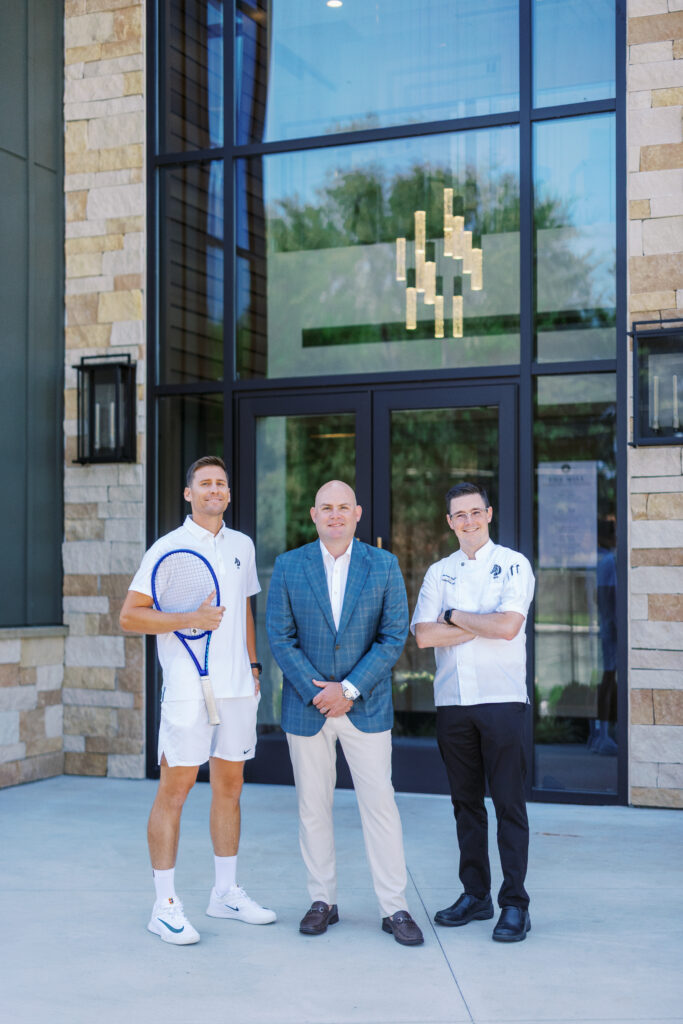
GM/COO Ryan Kenny (center), Executive Chef Michael Shannon (right) and Director of Racquets Chris Mullin (left) are bringing The Mill to life as a second clubhouse designed to expand how members dine, play and belong.
For more than a century, membership at Philadelphia Country Club (Gladwyne, Pa.) came with a clubhouse experience. Now it comes with two.
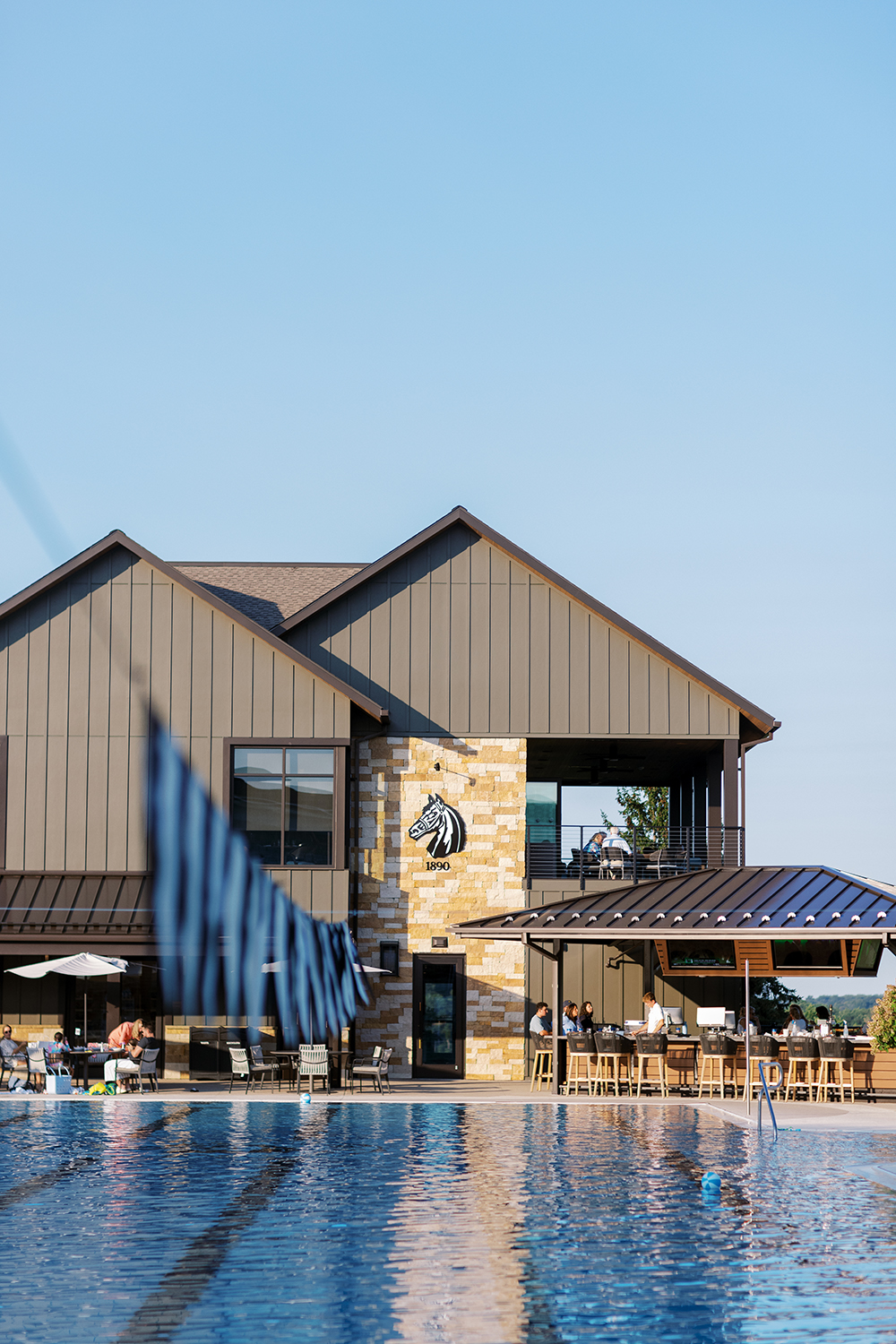
The Mill, Philadelphia CC’s new $16 million second clubhouse, was designed to add another dimension to life at the club. Members can grab pizza at Merc’s, watch the Eagles at 1601, work from the business center or walk off the tennis courts and stay for a drink. It is still Philadelphia CC, experienced differently.
Creating that second experience required the club to think beyond what to put inside a new building. It had to decide what The Mill should feel like, how it should operate and what would give members reasons to use it.
“The building was designed with a lot of intent,” says GM/COO Ryan Kenny. “We wanted to create something unique for our members.”
That intent runs through the three areas that have come to define The Mill. Kenny shaped the broader strategy around the building and its role within the club. Executive Chef Michael Shannon and Sous Chef Anthony Spiezio developed a culinary program specifically for it. And Director of Racquets Chris Mullin is already seeing the new environment change how members behave before and after they play.
More Than a Collection of Amenities
For Kenny, creating another way to experience Philadelphia CC meant considering not only what members might want, but when and how they might want to use it.
Take 1601.
Philadelphia CC could host an Eagles game before The Mill opened, but the experience was limited by the space. Members might gather around a television tucked into the corner of a dining room. At 1601, sports are part of the reason the room exists.
“We never really had a place where we could say, ‘Come to the club and watch the game,’” Kenny says. “Now we do.”
Food and beverage required a similar level of specificity. Kenny wanted The Mill to expand Philadelphia CC’s dining options without simply moving familiar menus into a new location.
“We were very conscious about making the offerings unique enough that we weren’t cannibalizing the dining rooms we already had,” he says.
That still leaves room for some overlap. A cheesesteak, for example, isn’t disappearing from the main clubhouse. At The Mill, the culinary team can offer a different interpretation.
“The advantage of a new build is that you can build the kitchen line around the programs you’re actually going to offer,” Kenny says.
The club also developed individual identities for the spaces members would encounter. The Mill takes its name from Spring Mill Road. Merc’s, its Italian concept and pizzeria, is a nod to Mercury, Philadelphia CC’s first polo pony. The sports bar, 1601, takes its name from the club’s address.
Other spaces widen the range of reasons members might find themselves there. The marketplace provides prepared foods and takeout. The business center offers a place to work. The racquets shop expands the club’s retail operation with more leisurewear and apparel geared toward the pool and casual use.
The Mill also changes what Philadelphia CC can accommodate.
The club has more than 1,000 members, 27 holes of golf and, according to Kenny, more than 272,000 sq. ft. of buildings across the property. Yet there is unused capacity. The 27-hole golf operation doesn’t reach 30,000 rounds annually, and Kenny sees additional room within aquatics and racquets.
Philadelphia CC now has the capacity to grow its membership by roughly 20%.
“There’s room,” Kenny says.
The building was designed with that longer view in mind. Kenny says three different structures had occupied the site over roughly 40 years. He doesn’t expect The Mill to follow that pattern.
“You don’t want to design for today,” he says. “You want to design for 10 years from now, 20 years from now.”
Then he extends the timeline considerably.
“This is a 100-year building.”
Giving The Mill a Culinary Identity
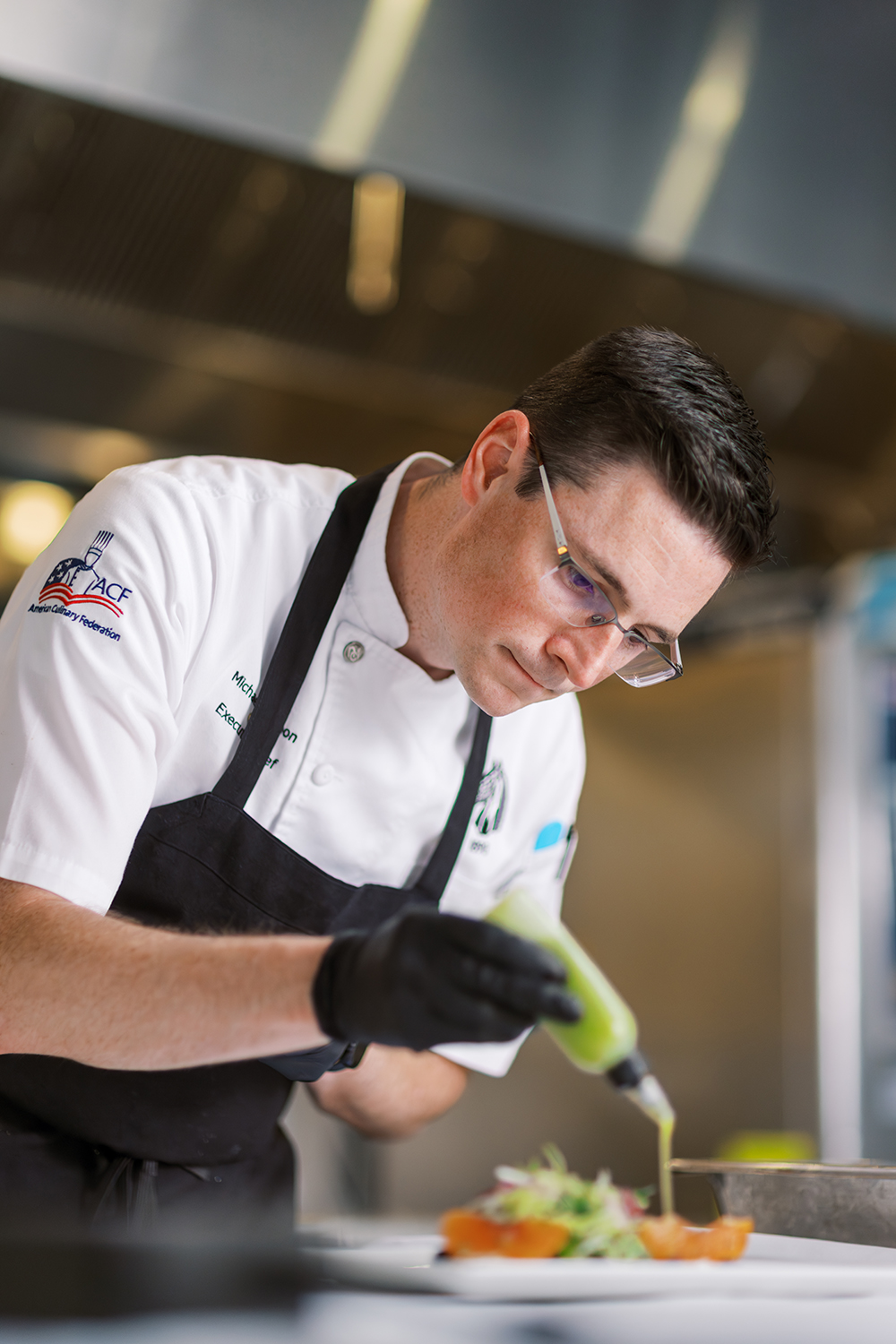
Shannon had one word in mind as he began developing The Mill’s culinary program: “Approachable.”
From there, the building itself helped point him toward the food.
“When I think of a mill, I think of flour, rustic food and fresh pasta,” Shannon says. “The idea is simple food executed at a very high level.”
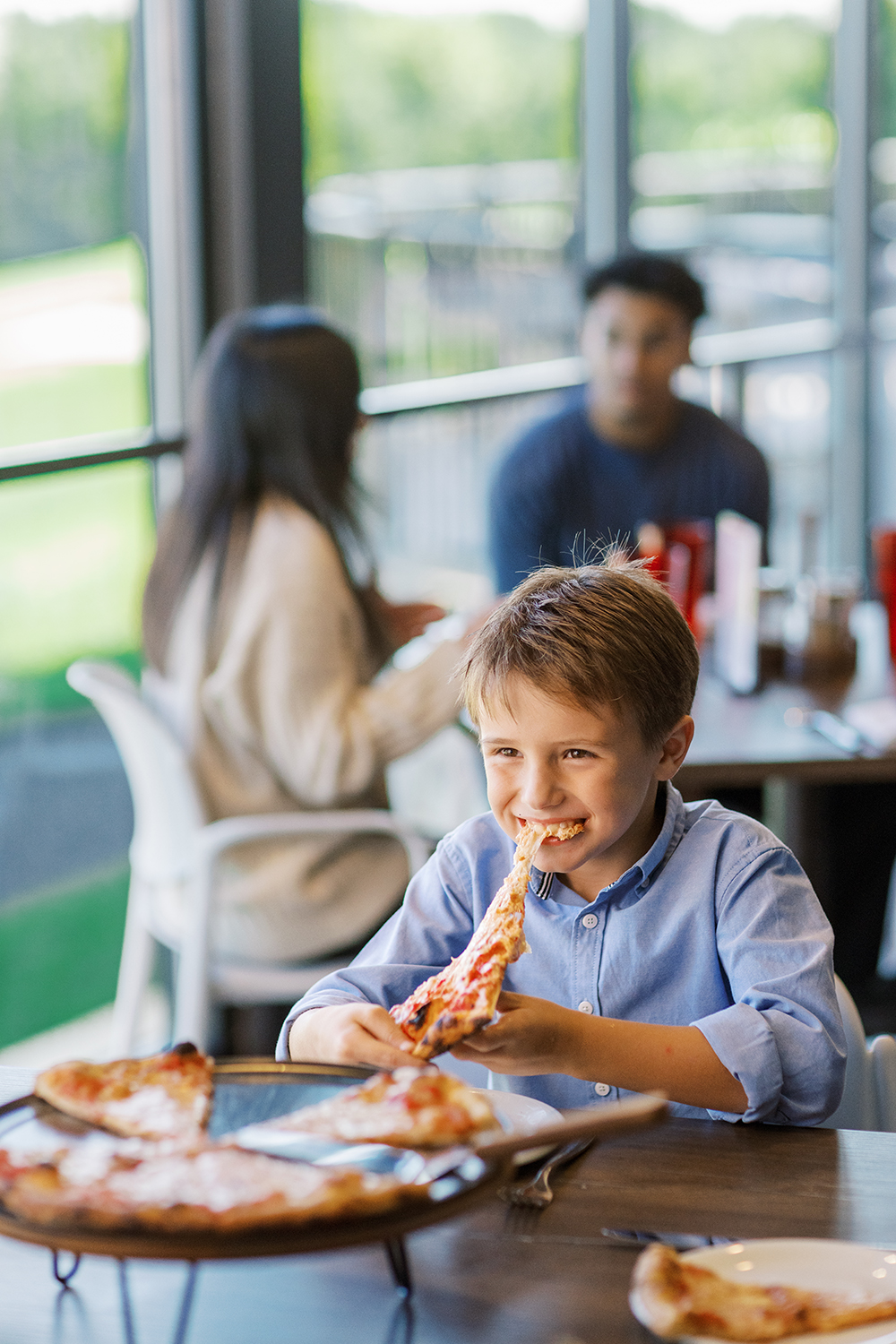
That thinking became the foundation for Merc’s, where fresh pasta and pizza anchor the menu. Pizza, in particular, became a months-long project. Philadelphia CC already served Neapolitan-style pizza, so Shannon and his team experimented with dough formulas and techniques to develop something different for the new restaurant.
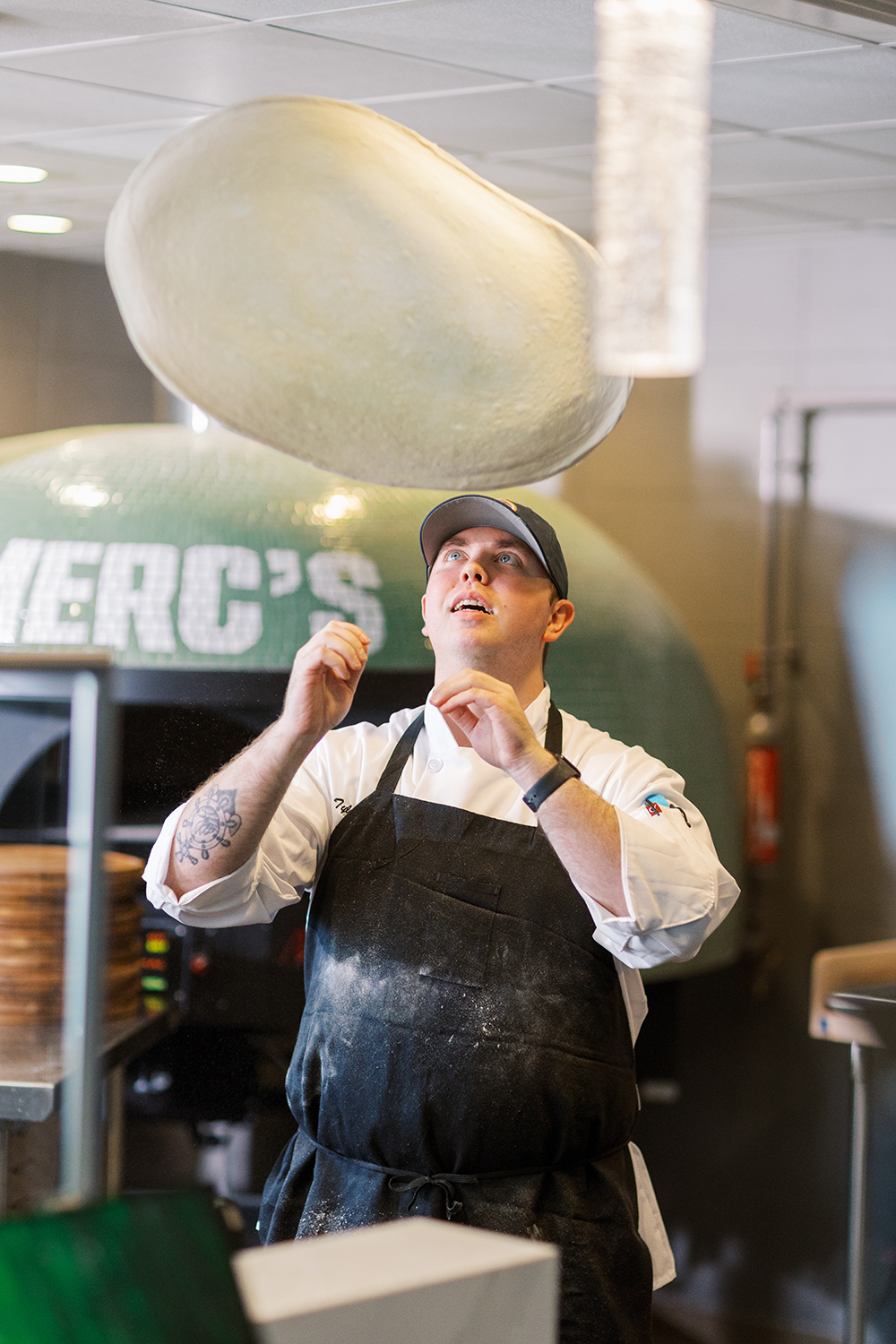
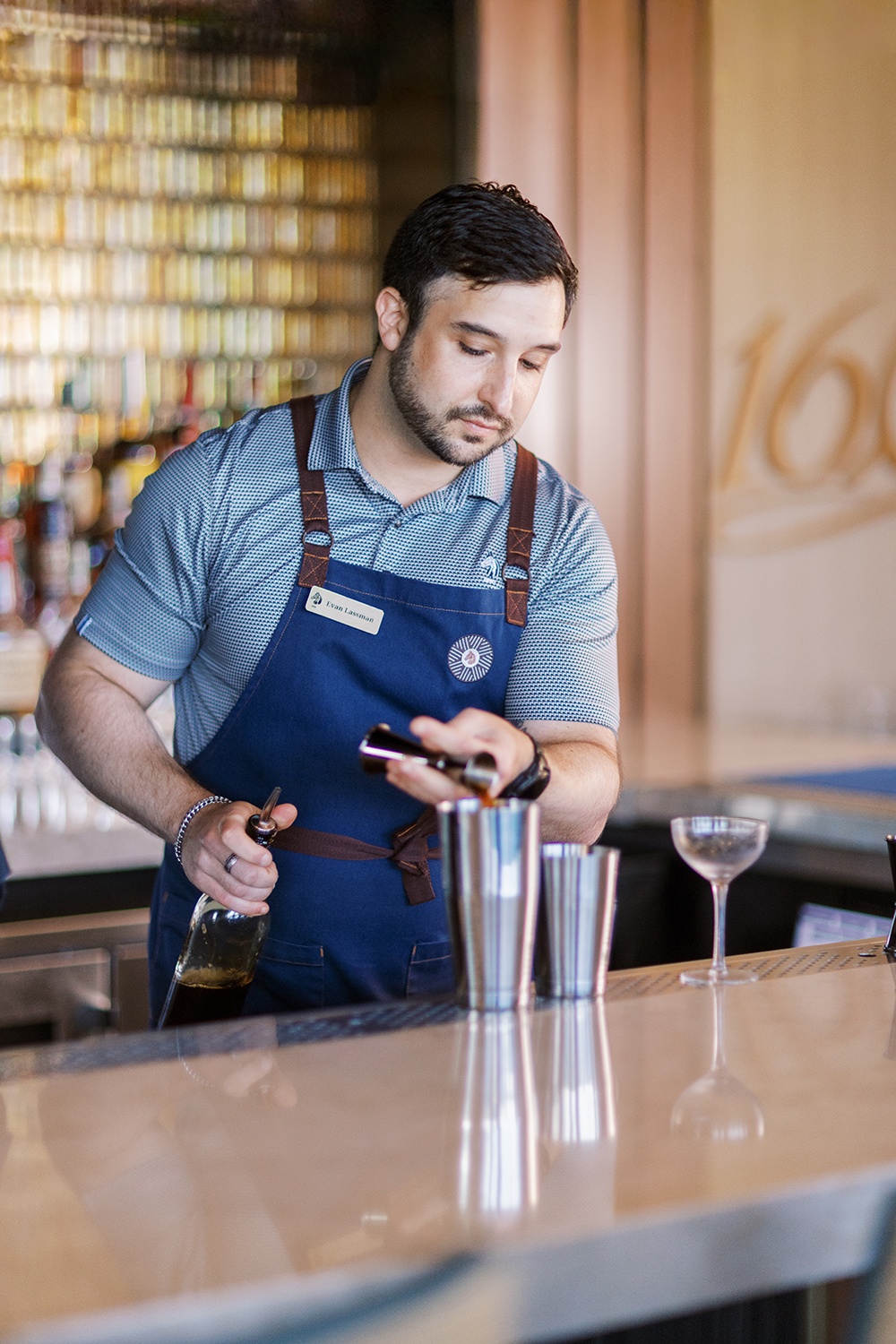
“We did a lot of R&D,” Shannon says. “Pizza dough is really more of a formula than a recipe. There’s a lot of chemistry behind it.”
Members became part of that development process before The Mill ever opened. Beginning in January, Shannon started running dishes intended for the new menus as weekly specials in the main clubhouse.
“By the time we opened, the recipes were structured, the binders were built, and the team had a foundation to work from,” he says.
Shannon was simultaneously working through how those menus would be produced. While reviewing the plans, he noticed a lower-level area with stainless-steel tables, a walk-in cooler and freezer that had been designated for storage.
He saw a production kitchen.
“I told the designer, ‘This needs to be prep space,’” Shannon says. Without it, cooks would have been forced to prep at their individual stations.
“If you’re not heavily involved in the process, you can end up with a kitchen that doesn’t work for the way you actually cook,” he says.
That production space now supports an operation that extends beyond the restaurants themselves. The marketplace, for example, carries prepared foods produced by Shannon’s team, with attendants monitoring inventory and communicating what needs to be replenished. The club can shift to a self-scan model during times of year when staffing the market becomes more difficult.
The Mill has also given Shannon room to reconsider what happens in the main clubhouse.
“When you’re doing 200 covers, it changes how you approach the food,” he says. “It still has to be great, but it has to be more straightforward.”
With another culinary operation absorbing some of that volume, Shannon sees an opportunity to push the main clubhouse dining program further.
“We can give the main clubhouse a little more elevation,” he says. “That can become the place where you bring a business client [and] where we can continue to refine the dining experience.”
The additional operation is changing how Shannon thinks about his culinary team, too. He is working toward a more traditional brigade structure in the main clubhouse, with cooks becoming more specialized by station, while the broader operation gives Philadelphia CC more ways to develop employees with different strengths.
Kenny sees an opportunity to build a stronger pipeline from culinary schools into that structure.
“We can build our internship program, develop culinarians and give them a path into more sophisticated dining,” he says.
For Shannon, The Mill has expanded the culinary program in both directions. It is giving him a new operation to build while creating more room to evolve the one Philadelphia CC already had.
Giving Members a Reason to Stay
For Director of Racquets Chris Mullin, court time has never been the entirety of the racquets experience.
Members want to play, but they also want what happens around the game—the conversation before a clinic, the drink afterward, the chance encounter with someone they weren’t expecting to see.
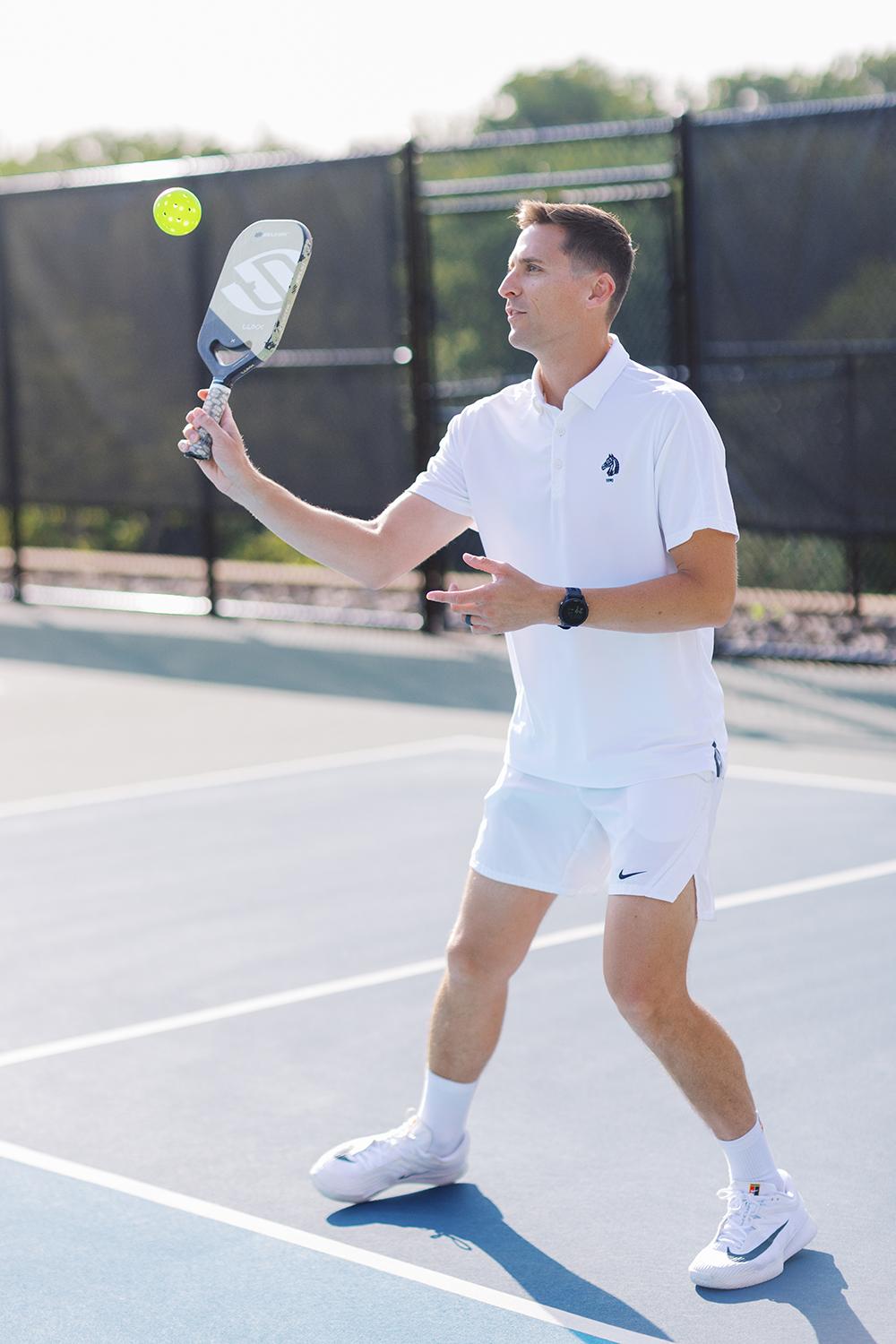
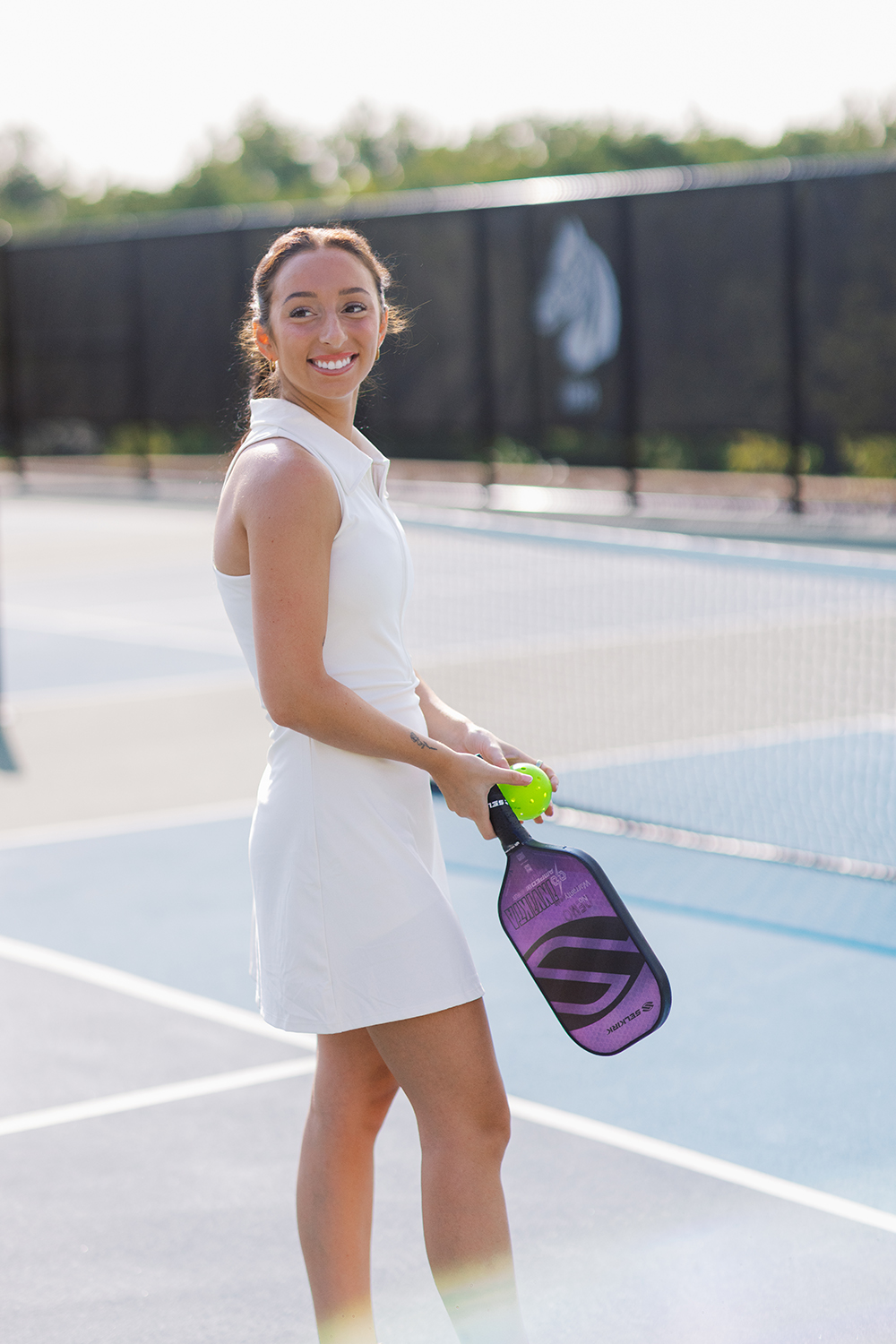
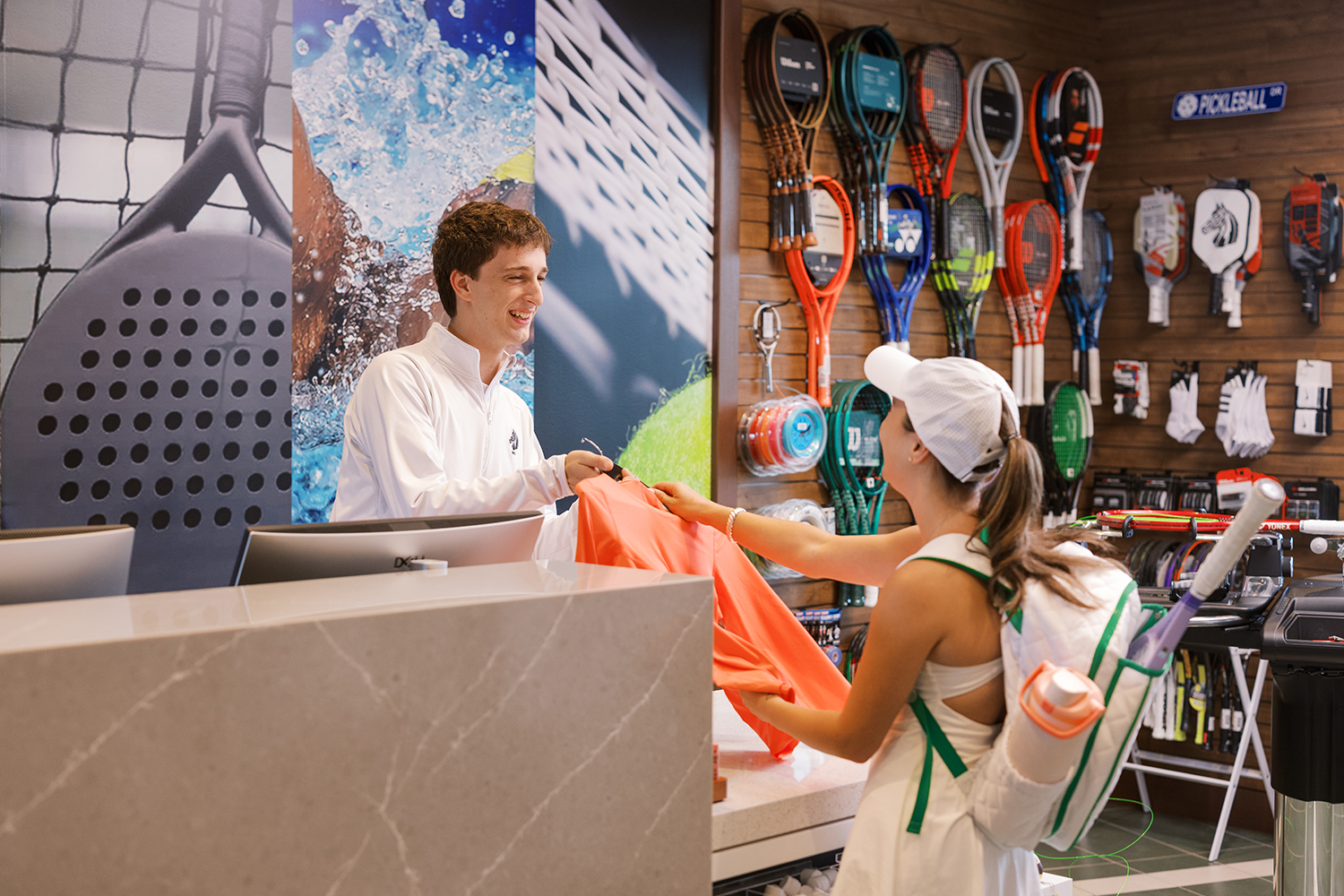
“They want more than to show up for their scheduled play and then leave,” Mullin says. “They want to run into people, socialize and spend time together.”
For a stretch, doing that became particularly difficult.
Construction of The Mill displaced the racquets operation for more than a year. The pro shop moved across campus into the squash building. Platform tennis players used a party tent outfitted with heaters and fire pits as a temporary warming hut. At times, construction immediately beside the courts restricted play.
The programming continued, but much of what surrounded it disappeared.
“It became a ‘show-up, play, and leave’ scenario,” Mullin says.
The Mill has reversed that dynamic.
Members can finish a match and walk directly into 1601. The permanent platform tennis warming hut sits beside the courts. Food and beverage is steps away. A player whose family is elsewhere at The Mill doesn’t necessarily have to choose between staying at racquets and joining them.
“I don’t think many racquets operations share a building with restaurants,” Mullin says. “You can walk off the court and go straight into a sports bar overlooking the golf course.”
Mullin is already seeing the effect extend beyond the members who regularly play.
“The program has always had a lot of energy,” he says. “Now we’re getting energy from people outside the program who want to get involved.”
Some are coming to him with a basic question: Where do I start?
“They’re asking, ‘How do I get into this program?’” Mullin says. “They know they’re going to be spending a lot of time in this building.”
That gives Mullin an opportunity to introduce racquets to members who may have previously had little reason to spend time around the courts. It also changes what he can build for the members already there.
He expects participation to grow, but lessons and clinics are only part of the opportunity.
“The next phase is creating a giant social event around racquets every month or every couple of weeks throughout the year,” Mullin says. “Members join to use the courts, but they’re also here for the social atmosphere.”
The events themselves aren’t new. The scale can be.
“The space will make them better and make it easier to grow them,” he says.
Even the club’s squash players, whose courts remain several minutes away in a separate building, now have a natural destination after play.
“Finish your squash match and come over to The Mill,” Mullin says. “We’re not separate.”
July’s typically a quieter month at Philadelphia CC as members travel. This year was different.
“It certainly didn’t feel like a quiet month with The Mill,” says Mullin.
What happens over the next year will be less about introducing members to a new building than watching them decide where it fits into their lives at the club. Some will know The Mill primarily through Merc’s. Others will come for 1601, racquets, the marketplace or simply because someone they know is already there.
That is where Philadelphia CC’s second clubhouse becomes more interesting than the sum of what was built inside it. The club created the possibilities. Members will decide what to make of them.