Rob Oosterhuis, General Manager/COO of Frenchman’s Creek Beach & Country Club (Palm Beach Gardens, Fla.), acknowledges that most country club renovation projects are encouraged by more than one driving factor.
The recently announced $10.48 million renovation focusing on Frenchman’s Creek signature 9th hole, driving range and short-game facilities is no different.
“Infrastructure is definitely a driving factor because we have a golf course and facility that’s in that 20 plus year range,” says Oosterhuis. “From a practical perspective, things have evolved since the last time we made renovations and people have a different view on clubs than they did years ago.”
Oosterhuis’ end goal for the renovations is member engagement and giving members a reason to stay on campus. It’s also giving members who want to improve their game an updated space to do so.
Designing for today’s member
William Schmit, Director of Agronomy of Frenchman’s Creek, says that a large part of the renovation is to add more space to the existing practice areas.
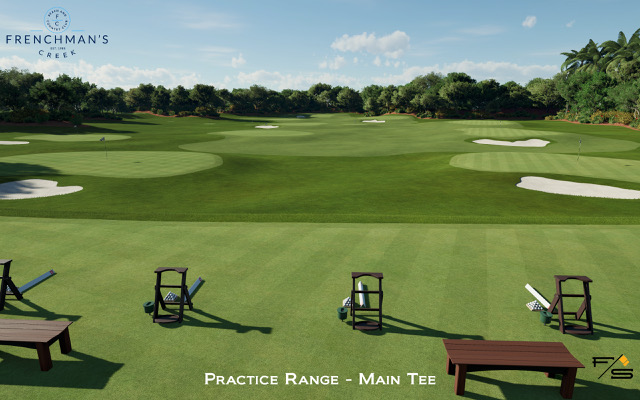
The entire driving range is being renovated, which will include a main driving range tee, as well as four individual smaller tees along the western edge that members can hit irons from.
The driving range tee will also be brought down from an elevated tee to a traditional tee line. With 606 members, the average age of membership settles around 75 years old.
“Our driving range tee was also an elevated tee, which caused struggles with some of our members who had to go up a number of stairs to access it,” says Schmit.
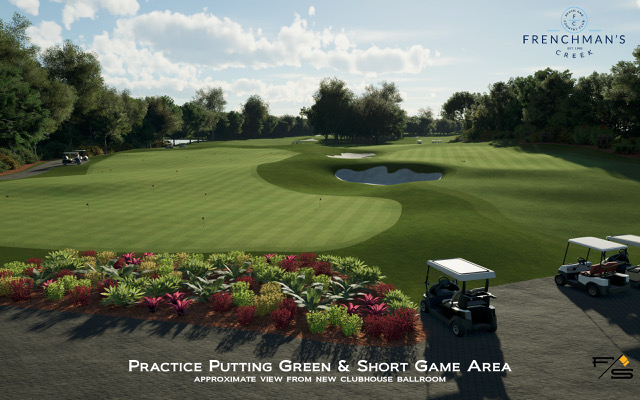
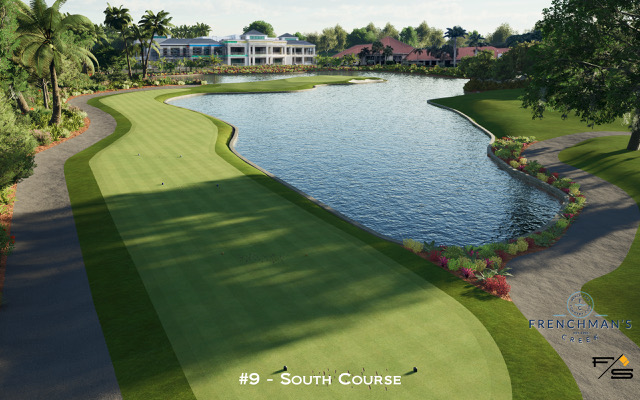
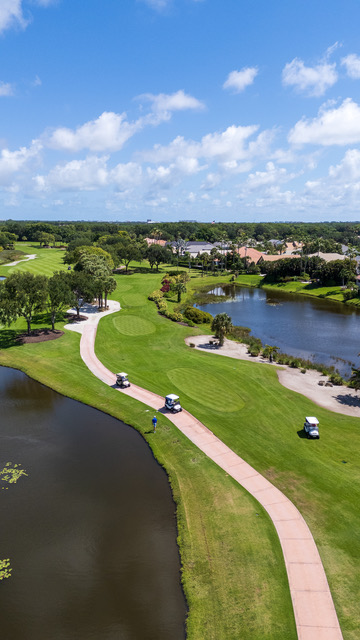
The renovation also includes an expanded putting green and short game area with two different greens and many different shot options. Plus, a complete renovation of the signature 9th hole, which will expand the club’s irrigation pond.
The renovation has a tentative completion date of late October to early November.
More space for practice and play
JR Congdon, Director of Golf, has noticed that membership has enjoyed practicing golf more so than playing rounds of golf.
“Members enjoy going up to the range and using various practice facilities and amenities, and I think some of that has to do with it being a more social thing than just honing their own skills,” says Congdon.
Because of this, the club looked at the renovation from two different directions.
“We wanted to make sure we included areas [in the renovation] that were more secluded, so if members did want to have a serious practice session or take individual lessons, they could do so in a more controlled and serene environment,” says Congdon.
This is a driving factor behind building what the club calls the western tees.
Congdon says part and parcel to this project, even though it won’t be getting done this summer, is building a state of the art instructional facility.
This is something the club hasn’t had in the past that will feature golf simulator technology.
Oosterhuis says this will be a 2027 project with a golf course number one renovation to begin in 2028 and the second course renovation to begin in 2029.
“We’re really taking the leap forward in regards to not just the amenity piece, but the technology piece, and instructional and fitting programs,” says Congdon. “It takes into consideration that members do want to improve their skills, but it’s a huge social league for us because the practice facilities are really a social hub for the club.”
Infrastructure expansion
From an infrastructure standpoint, Schmidt says that there was extra repair and maintenance needed on the driving range tee, which was undersized. The new area will be expanded from 40,000 square feet to around 60,000 square feet when all tees are included.
“In our peak season, when our members are here the most, the grass is recovering the least,” he says. “We found that as soon as we got through the peak of the season, we would start to have less than ideal turf conditions on the range tee, and part of that was a size issue.”
The expansion in this lot will help fix this problem and turn the space into a more usable amenity for members.
A plan shaped by members
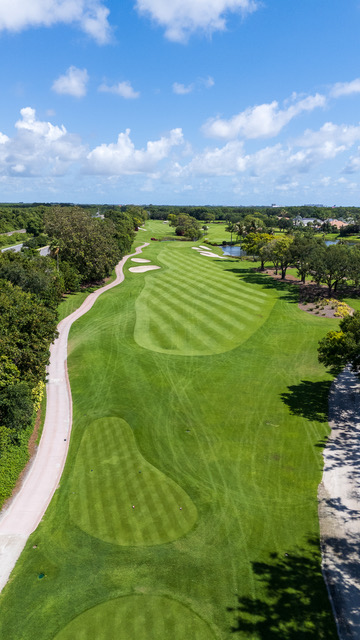
The putting green short game area is going to be relocated to what were previously tee boxes on the first hole of each golf course.
Those holes will then be shortened to par fours.
The putting greens will go from 9,500 square feet to about 16,500 square feet and the chipping greens will go from 3,500 square feet to now 10,000 square feet. The usable chipping space will go from three quarters of an acre to about one and a half acres.
These changes come directly from member feedback. The club utilized its Golf Course Master Planning Committee and board of directors to walk through different designs before settling on the one everybody felt was best for the community.
The course architect, Frye/Straka held round tables with different segments of membership from men and women to higher- and lower-handicap golfers and so forth to involve as many different people into the planning process.
The contract with Frye/Straka was signed at the end of 2023 and these planning preparations took place until May of this year when the official groundbreaking ceremony took place.
“Everyone wants the facilities to be the best they can be, but having over 600 members, best has many different definitions,” says Schmit.
This is why the Master Planning Committee was created with so many demographics of membership. Each member demographic was represented at these planning meetings to offer insight into what different groups were wanting with the renovations.
As renovations begin, the marketing team at Frenchmen’s Creek is working hard to keep members up to date through newsletters and organic conversations.
The club also has a GoPro set up on top of the clubhouse to film the progress of the construction and turn it into a timelapse video for members to see each stage of the project.