Kinsale Country Club (Naples, Fla.) recently opened its doors to members in November 2024, but the project started almost a year and a half prior to that opening date.
The golf-exclusive club sits on roughly 100 acres and has 255 members. With a smaller footprint, there is only 48 acres of actual maintained turf for the golf course, which Rusty Mercer, Director of Agronomy at the club, has spent the last two years growing and nurturing.

Rusty Mercer, Director of Agronomy of Kinsale Country Club, has been maintaining golf course projects for over 30 years.
In Mercer’s experience, the first two years of developing a course are the most crucial—and the most different.
Year One Vs. Year Two
“The first year of any new development is absolute chaos,” says Mercer.
At Kinsale, planting extended through early summer in the first year, making it difficult for the team to establish a rhythm.
“You’ve got some grass that might have been plated in April and May, and then you’ve got some grass that gets planted in August or September,” he says. “And you’re trying to open in November. It’s a very chaotic thing when you’re trying to track all the various applications on greens, tees, and fairways because they’re all staged at different times.”
Mercer says the first year is about establishing turf everywhere while trying to meet the opening-day timeline.
Even when the grass grows in, it’s not going to be perfect by opening day. Because of that, Mercer says he was “bombing the grass with fertility and water” to push growth. Even once the grass grows in, it is not going to be perfect by opening day.
“It takes about two to four years for a golf course to mature into what it will eventually be,” he says. “With the understanding that it’s a living, breathing thing. It’s never truly finished.”
Communicating that to membership is crucial to make sure everyone’s expectations are aligned, he says.
The course will always evolve, but getting through those first couple of seasons allows agronomy leaders, staff and members to begin seeing the long-term intent.
“So, year one is all about blowing and going and trying to get grass covered up everywhere, so that you can open with the understanding that it’s not going to be perfect, and it’s going to be a little different from the first holes that you planted to the last holes that you planted,” says Mercer.
That’s exactly what Mercer saw happening at Kinsale Country Club in its first year.
Stepping into year two is when things start working in a pattern and the team working on the course is able to settle into what the site wants.
“Year two, more than year three or four, is a discovery period,” says Mercer. “It’s reflecting back on what we did and how the grounds reacted and tweaking the program to get the results we want.”
For example, Bermuda grass in South Florida grows really fast, Mercer says. He and his team are fine tuning and taking into account the strategies that aren’t working and pivoting.
“After two years, hopefully you’ve zeroed in on the things that make a big, positive difference for you,” he says.
Once you find those things, Mercer says he is a big believer in doing the strategies that work on a repeatable basis.
Lessons from previous projects
During the beginning years of the Kinsale golf course, Mercer also had to manage member expectations.
He says he gave roughly 100 tours so members could see the site’s progress for themselves.
“They did not think I would be able to pull it off for a November opening,” he laughs. “But that just fueled us even more and we did it. So in that way, we had already exceeded expectations.”
Mercer was also able to use the seasonality of membership to his advantage. With most members leaving Naples in April and not coming back until October, the course was able to make a lot of progress that members could see when they returned.
“After the first year, members were shocked at the growth of grass in the native areas,” he says. “I think they’ll see even more of that after another summer of growth on the native materials and adding more native plants into those areas.”
The project at Kinsale Country Club wasn’t Mercer’s first rodeo in bringing a project to life. He mentions that he has somewhat of an idea of what each location will bring from year to year, but there are always surprises along the way.
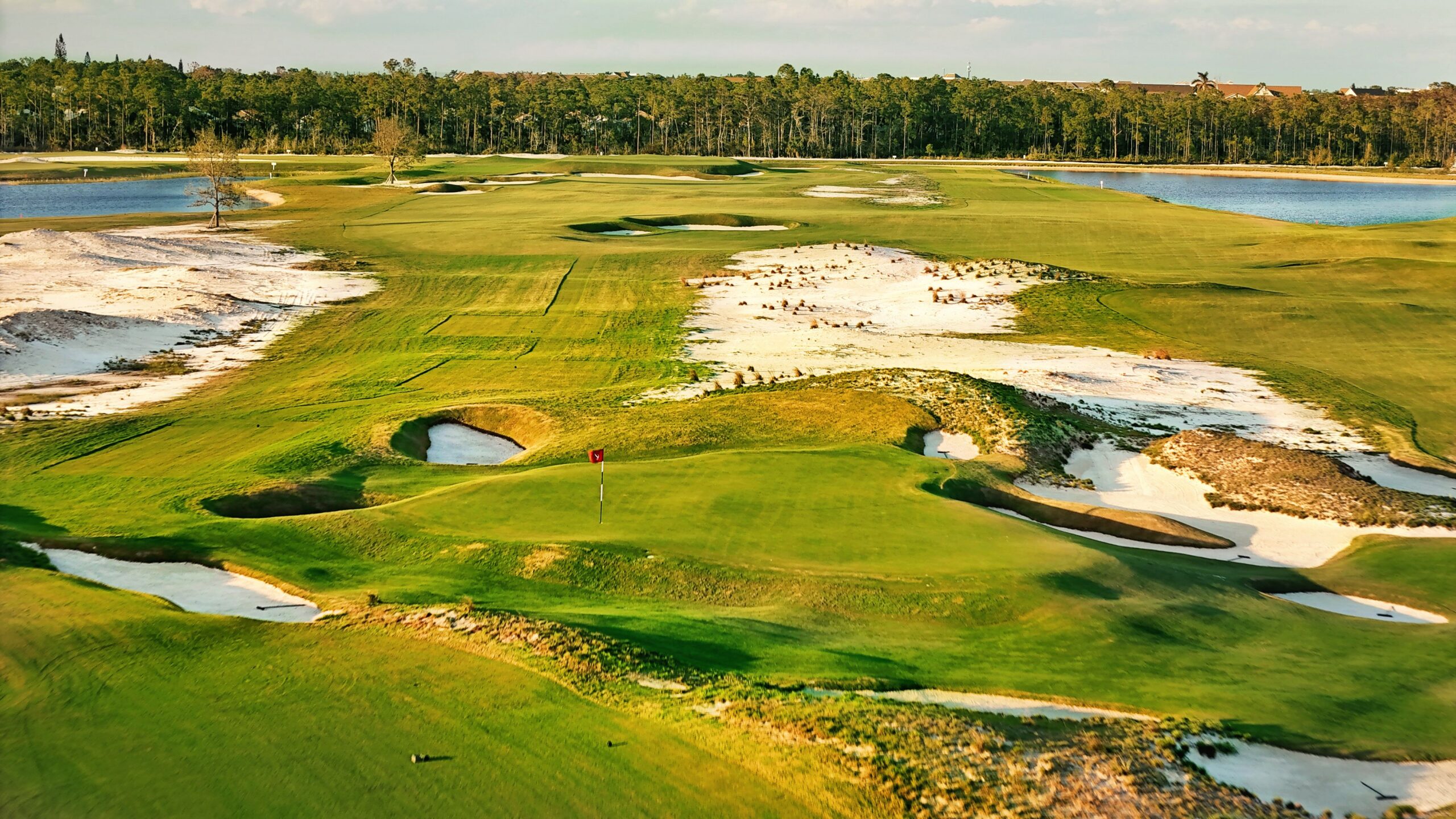
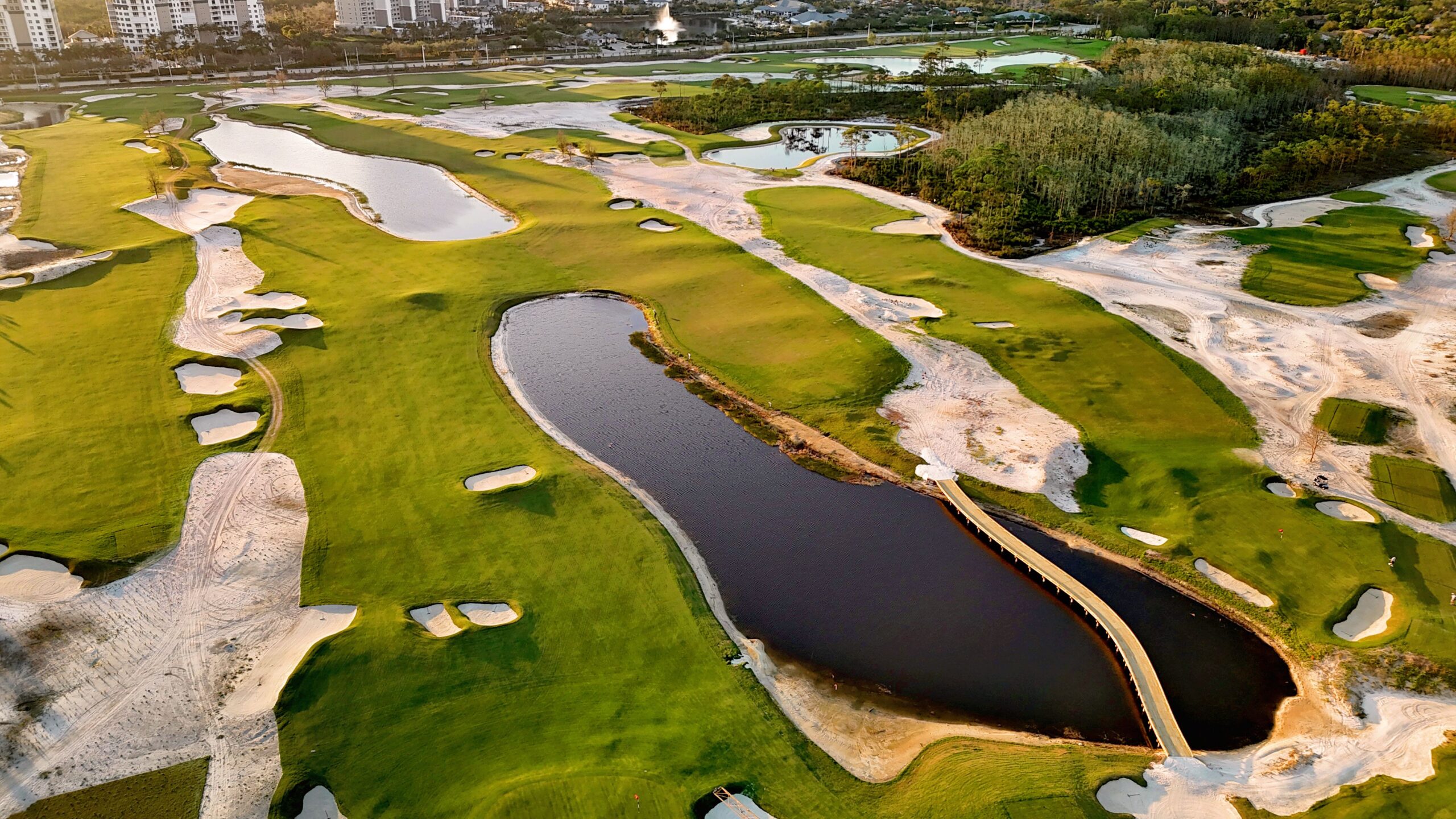
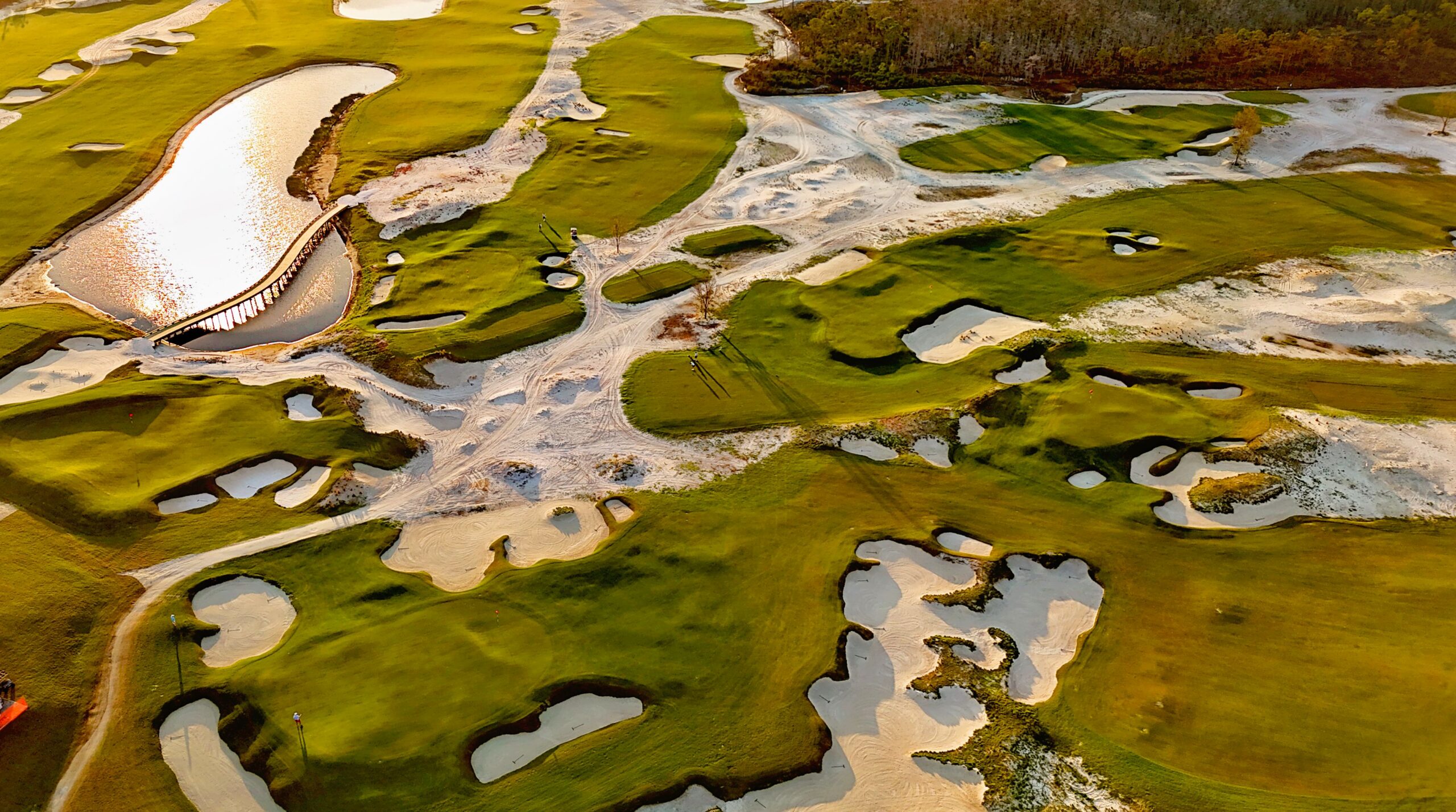
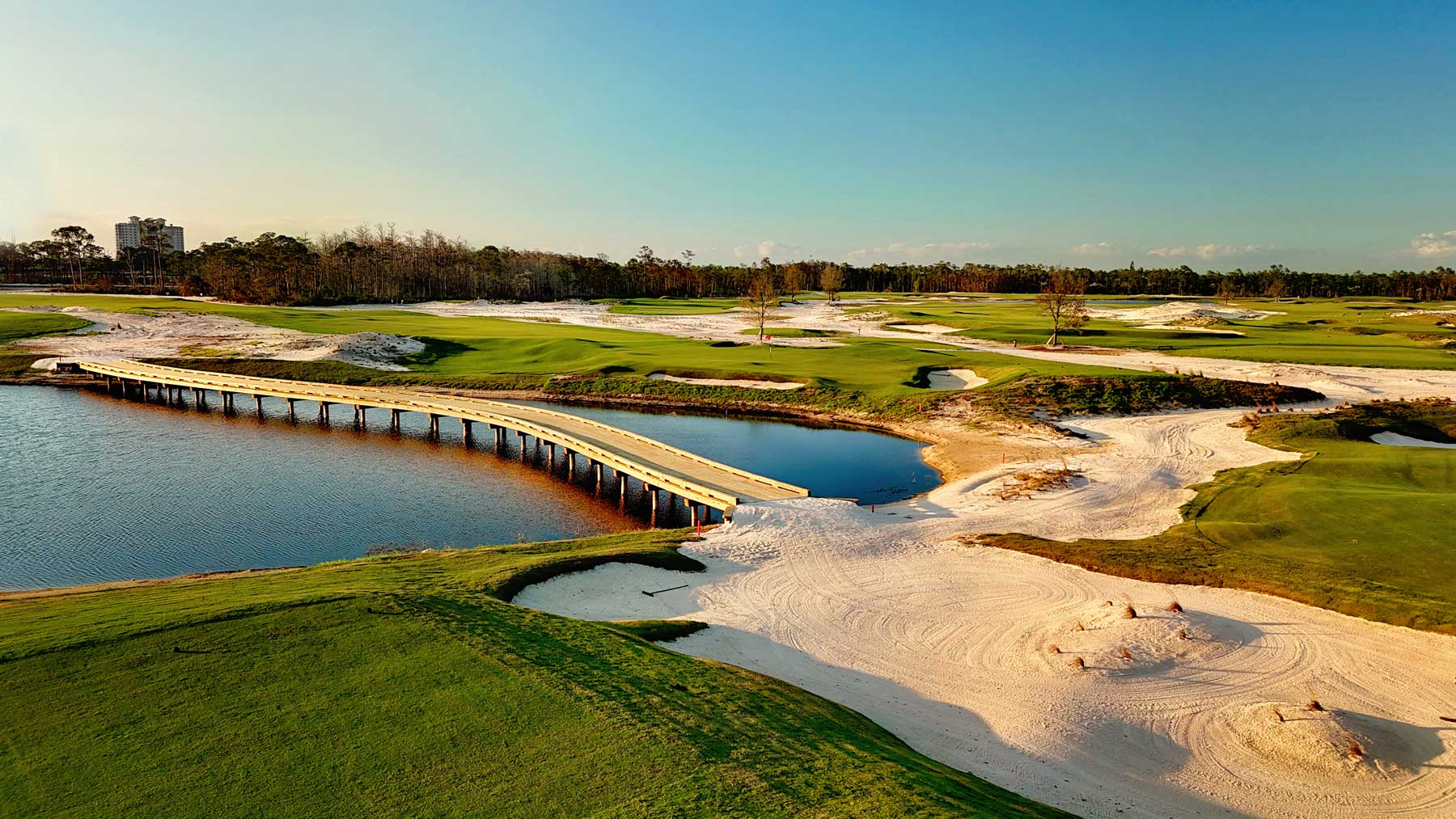
“The Kinsale project was similarly set up as another course with a really murky, swampy piece of ground,” says Mercer. “So, we made the decision to cap it with 18-inches of straight sand, which changes the game altogether.”
Taking the knowledge from the old project allowed the Kinsale project to be set up for success. Mercer acknowledges that growing Bermuda grass in straight sand is not the easiest thing to do either.
Luckily, the initial project also lended experience to Mercer and his team through this, so they already had a gameplan before construction even started.
One thing that did surprise Mercer was the weather. Living only two hours North of the course, Mercer was shocked by how much more humid the weather was in Naples.
“That was a curve we had to figure out,” he says. “The grass isn’t going to shut down as early or for as long. That impacts a lot of things like how much growth regulation needs to go out, when it needs to go out—but those are all fairly small detailing things you pick up on pretty quick.”
Defining great playing conditions
When asked how Mercer measures success on projects like this he once again draws from experience.
“If this was the first or second time I had done a project like this I probably wouldn’t have an answer for you,” he says. “But being at this for 30 years, I can confidently say it’s all feel.
“I’ve walked on so many golf courses and on so much turf that there’s a sound that the ball makes when it lands on a green that I’m looking for, or when I swing an eight iron out on the fairway, there’s a feel, deflection, that I want to feel when the club cuts through the turf and makes contact with the golf ball.”
Having this feeling and understanding comes from Mercer’s experience of walking projects from conception to completion, but he also says it comes from listening to great architects talk about what constitutes great golf.
Listening to great architects is how Mercer came to believe what the most important area of the course is—the approaches.
“Thirty years ago, Bill Coore asked me what the most important area of a golf course is and I said the greens,” laughs Mercer. “He told me I was wrong and that it’s actually 30 yards in front of a green.”
Mercer explains that at many facilities when a ball is hit a bit short of the green, the ball will stay right there. However, if you land the ball on the green, it bounces and runs off the back of the green.
“You can’t play golf under those circumstances,” he says. “It’s vitally important that 30 yards in front of the green is predictable and will allow a golf ball to bounce and run up into the green. That was something I learned from Coore and never let go of.”
Because of that, Mercer and his team spend a lot of time, money and effort top dressing and doing things that will allow for the ball to release and head towards the pin.
To do this, Mercer says he does the exact same thing he does on the greens on the approaches—with the exception of the height of the cut. This way, the approach becomes an extension of the green.
“People always try to make the game of golf a man versus man game, and I don’t think it’s ever been that,” he says. “I think it’s always been a man versus land competition.”