Alec Moore, Director of Racquets of Hope Valley Country Club (Durham, N.C.), describes golf as the core of Hope Valley’s identity. But with the closure of the golf course next year for a renovation project, the racquets program will become the primary recreational outlet for members.
“The renovation will position our racquets program as the key social hub for our membership in 2027 and beyond,” he says.
With the project looming, Moore says the club has seen a surge in golfers starting to make more regular use of the racquets facilities.
Hope Valley has invested in both the culture of its racquets program and its facilities to help build participation.
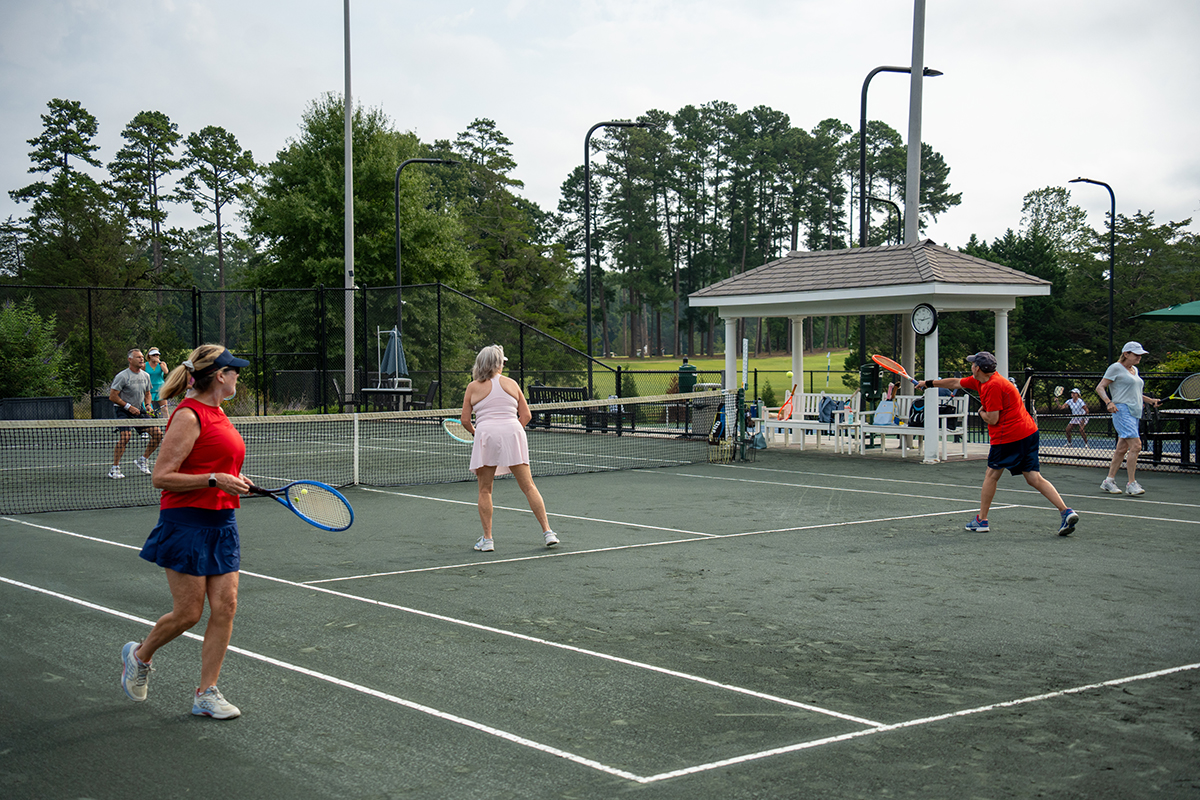
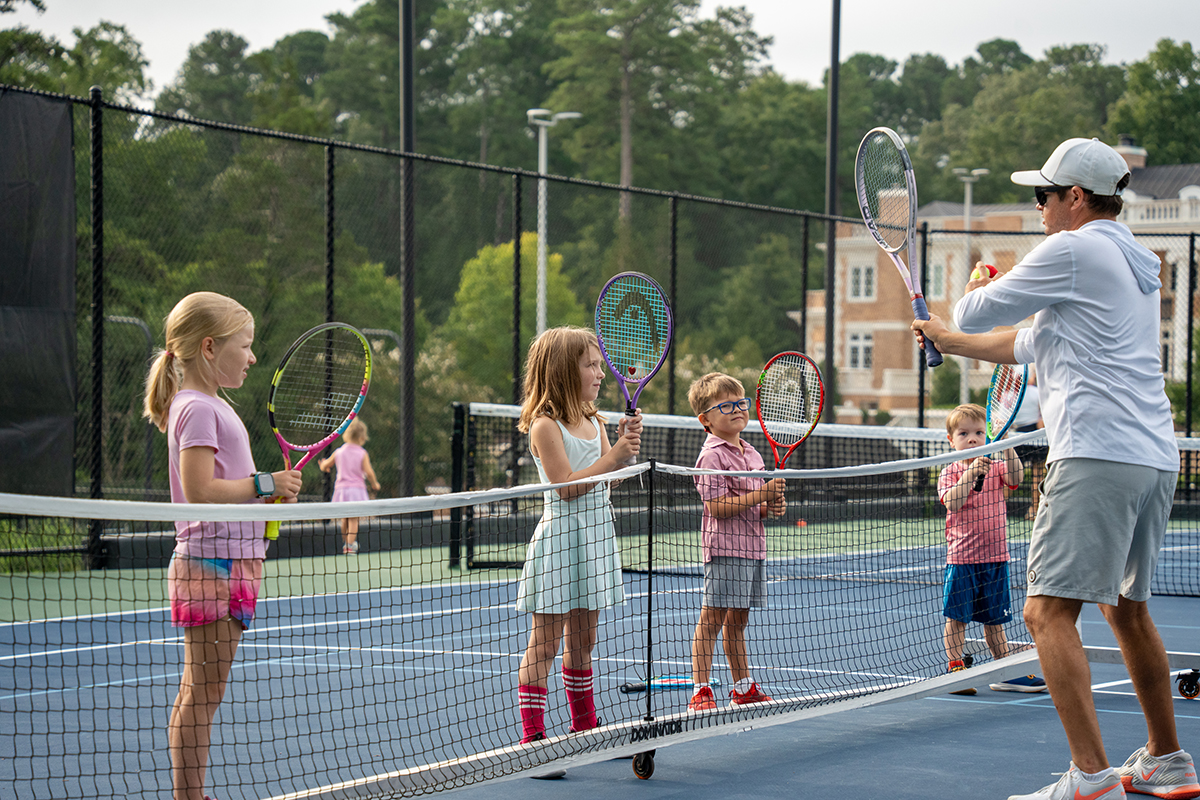
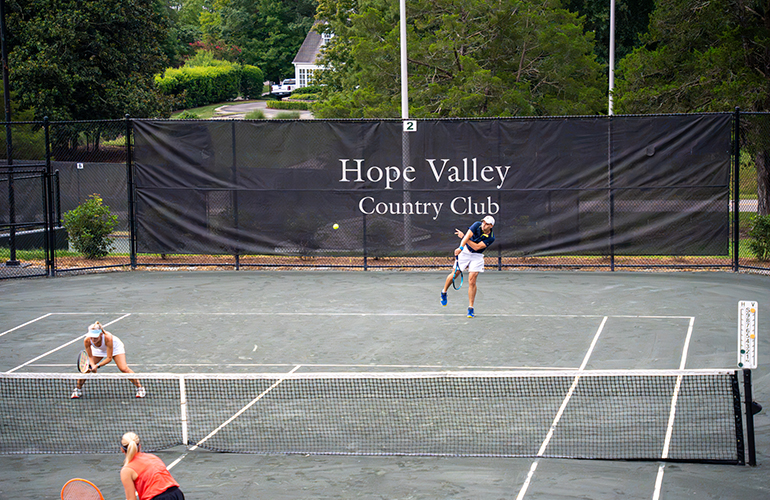
Welcoming golfers to the courts
As the course construction project gets closer, Moore is working with the head of golf instruction to roll out a series of crossover instructional and social programs for golfers new to racquets.
“The most effective way to get someone to pick up a racquet for the first time is low-pressure, non-intimidating events,” he says. “We’ve also made sure to dedicate personnel and prime times on the schedule for beginner tennis and pickleball instructional programming.”
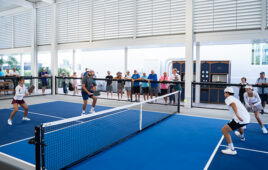
Cardio tennis has also become a huge driver of the club’s racquets participation because of its high-energy, low-pressure atmosphere.
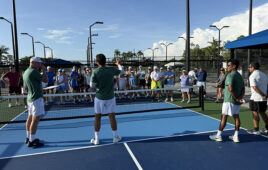
Moore also highlights an exhibition match that drew more than 100 members, many of whom had never played a racquet sport.
The club partnered with its local pro league to create a promotional opportunity for the club’s program. Hope Valley converted many spectators into new players by engaging them through the event.
Taking a One Club approach
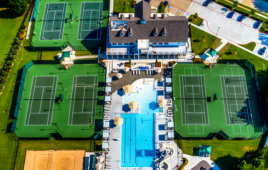
Hope Valley Country Club features seven Har-Tru courts, one championship hard court and three dedicated pickleball courts.
The club was originally founded as a gold club in 1926, but expanded to include racquets to reach a broader range of members. The club began building courts in 1989.
“A strong racquets program serves as an excellent outlet for a club’s non-golf demographic,” he adds. “And as a complementary use of membership if the primary reason for joining [Hope Valley] is golf.”
Moore describes the racquets program as both a primary and complementary amenity for the club’s membership.
“Our club has become better about evaluating club needs with a holistic ‘One Club’ view,” he says. “Meaning, it’s no longer F&B, pool and racquets fighting over golf’s leftovers. We want all members, whether full golf, racquets or social to experience the club in a positive way.”
This only happens, he says, when resources, time, and attention are dedicated to each area.
Rebuilding the program before adding amenities
Moore says the racquets program hit a low point in 2022. A run-down facility and toxic relationships among staff that spilled into the member experience prompted management and a group of committee members to seek a new direction in 2023.
“Members wanted a program they could be proud of and that they were welcome in,” says Moore.
Club leadership acknowledged the potential and took the steps to make it happen. There was buy-in, both financial and emotional, from a core group of members that helped drive the program’s resurgence in 2023 and 2024.
“This growth allowed us to hire key personnel at the right time to help continue to propel our program,” he says.
The case for investing in racquets came from this support and from leadership creating a culture and program that people wanted to be a part of.
“We focused on community building, member-centric programming, and creating a space for people to connect while enjoying their club, whether with a racquet in hand or not,” he says.
The culture and people came first, which organically brought more interactive programs. Then came the investment in amenities once the club had a track record of success.
“Amenities are only valuable if you have a community who wants to utilize them,” he says. “Without this and the people to foster the community, capital investment in facilities is a waste. You have to have the right people in place, and you have to give members a reason to want to consistently spend time at the facility. Amenities alone are not effective in this. Members crave connection.”
Building on participation growth
Moore also reports an uptick in racquets participation since COVID.
Programming also has a lot to do with the increased participation, which Moore says is at an all-time high now.
“Innovative formats like cardio tennis and triples, alongside beginner programming and pickleball have made playing racquet sports incredibly accessible to members of all backgrounds,” he adds. “Successful programs are moving away from one-on-one instruction as the primary driver of participation and emphasizing member engagement through events and group programming.”
Investments in the facilities and programs have also driven growth. Over the last year, the club invested in a new pavilion and a pro shop renovation.
“This has turned a once sad and forgotten area of the club into a bustling spot where members meet for a post-match beverage, meal or game of mahjong,” he says.
The club also invested in cameras on the courts to enhance instructional programs and allow members to record their sessions to track performance.
The club is looking to add padel and possibly an indoor/outdoor covered court for year-round play.
The racquets program is now at the forefront of the club’s next long-range plan as one of the key drivers of member satisfaction and connection.
Starting with community
The case for community and connection is the backbone of Moore’s advice to other clubs looking to invest in their racquets programs.
“Members join clubs not just for access to amenities, but to have a built-in community of like-minded peers with which they can enjoy their free time,” he says. “Work within your budget to create and promote a robust schedule of social events to drive member engagement. From there, your lessons and clinic participation will grow to drive departmental revenue and further increase the value of your membership.”
He also advises racquets professionals at golf-heavy clubs to get plugged in with a network of peers who share the same experience.
“It’s amazing how many resources there are available and how many others in our industry are craving connections and validation from other like-minded professionals,” he says.
Moore encourages building relationships through organizations like DCA, RSPA and PTR, as well as with local pros.
“We as an industry are stronger when we are actively sharing ideas and thoughts, which only results in a better member experience at our clubs,” he says.