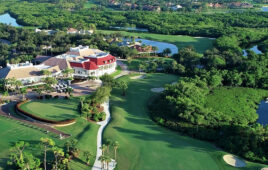
A golf course project underway in Portugal is pairing changes to the playing experience with changes to how the course will be maintained.
Palmares Ocean Living & Golf, a 27-hole resort in Portugal’s Algarve region, is widening fairways, expanding short-grass areas around greens, updating tee surfaces and renovating and repositioning bunkers. Changes to irrigation and maintenance practices are expected to reduce the total irrigated area by 20%, improve water efficiency and lower operating costs.
In some areas around the greens, short grass is being used instead of sand bunkers. The goal is to give golfers of different skill levels more options while reducing some of the maintenance demands of the course.
The project arrives at a time when another major golf course project has generated attention for very different reasons.
The Yale Golf Course reopened this spring following an extensive restoration that included reconstructed greens, restored bunkers, expanded tees, a new irrigation system and other infrastructure improvements.
By late summer, reports of poor course conditions had begun circulating. In September, there were reports that Yale had acknowledged the problems and was working to address them. The Northeast had also experienced a difficult summer for golf course maintenance.
The circumstances at Yale and Palmares are different, and Yale’s experience doesn’t explain what Palmares is doing. Put side by side, though, the two projects raise a broader issue for clubs undertaking significant golf course work.
A renovation or restoration is planned around what the golf course will become. Once it reopens, the club has to maintain it.
That second part carries its own set of requirements. New or restored features require labor. Turf requires water and inputs. Expectations for course conditions can change following a significant investment. The operating budget and staffing model have to support the finished product long after construction spending ends.
At Palmares, those considerations are being incorporated into the current work. The resort expects to reduce irrigated acreage by 20%, and some changes are intended to address playability and maintenance demands at the same time.
That doesn’t mean fewer bunkers or less irrigated turf are the answer for every club. The more relevant question is what happens to the operating requirements when a club changes its golf course.
Major golf course projects tend to come with detailed plans for construction, design and reopening. The finished course also establishes a new baseline for what members expect to experience every time they play it.
For clubs considering their own projects, the construction budget is only part of the financial picture. The finished course brings ongoing requirements for labor, water, maintenance and operations.
The golf course has to work after the work is done.