Technology used to be something several departments could collectively manage. Marketing owned the website. Operations dealt with systems. An outside IT company handled servers, computers and the inevitable printer problem.
That model becomes harder to sustain as technology reaches nearly every part of the operation.

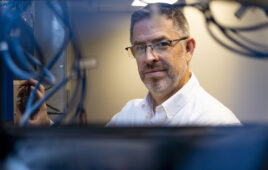
Nishani Kessler, Director of Administration and Technology, St. Andrews Country Club
At St. Andrews Country Club in Boca Raton, Fla., Nishani Kessler is helping define what comes next.
Kessler joined St. Andrews during the pandemic as a front desk hostess after working in hotels and event planning for the Florida Panthers. With a communications degree and an interest in technology, she moved into the club’s communications operation, where responsibility for its tech platform gave her a closer look at how deeply technology was embedded across departments. She eventually returned to school to deepen that knowledge and was promoted into the newly created role of Director of Administration and Technology.
Today, she oversees technology as well as marketing and communications, works closely with St. Andrews’ outsourced IT partner and is helping the club think more deliberately about everything from cybersecurity and AI to data, AV systems and the technology that could be built into future capital projects. Her premise is fairly simple. Technology is no longer just hardware and software. It touches virtually everything a club does.
Club + Resort Business (C+RB): You started in communications at St. Andrews. How did technology become the direction you wanted to take your career?
Nishani Kessler (NK): Part of my communications job was being responsible for the platform that powers so much of our club, so I really learned the ins and outs of the system. I was always interested in technology, and the more I learned, the more I realized there was so much more to it. Technology is still underutilized in the club space.
I found that niche and decided I wanted to be someone who could say, “This is important. This is relevant.” Every club needs someone who owns technology because it touches every single department in some way.
If that was what I wanted to do, I also knew I needed to educate myself more. Technology has so many different layers, so I went back and got my master’s degree.
C+RB: What did that additional education give you that you could bring back to the club?
NK: It gave me a better understanding of all the different layers of technology and how they work together. How does a database management system work? What is happening behind the scenes? When we move from one software platform to another, why do we do it? How does it integrate with everything else?
There are so many different software platforms and physical pieces of equipment. The degree gave me that base knowledge to understand how those pieces work together.
It was also interesting because I could bring the club perspective into those conversations. In the corporate world, so much of the conversation is about sales and generating revenue. In the club space, it’s about the member experience, so you have to think about those decisions differently.
C+RB: What does owning technology actually look like at St. Andrews?
NK: I work with an outsourced IT company, so between them and me, we see everything that is going on. I talk with them every day about what needs to get done, what is on the agenda, and what we can address quickly.
They diagnose technical issues, and if I need to know something or we need to purchase something, I handle it. I also work closely with the company owner on technology innovations. He has the deep technical knowledge, and I have the club and technology experience, so we bring those two perspectives together.
At a club this size, there are so many systems and so many moving parts. That’s why having someone looking across all of it is important.
C+RB: You also oversee marketing and communications. Why put those areas together?
NK: They work hand in hand. Technology used to be very siloed. You had tech, and tech focused on hardware and software. It is much deeper than that now. Technology is part of almost everything you do, including how you communicate with members and how they interact with the club. Having those areas together lets us look at the entire experience instead of treating technology as something separate.
C+RB: How does having someone in your position change the way the club thinks about future capital projects?
NK: We are at the beginning stages of looking at the technology component of our master plan. We have systems in our newer facilities that are working really well, so we can look at what makes sense to bring into future projects.
AV and sound will be a big piece. If you are going to have a beautiful new building and hold a lot of events there, how do you make sure the AV is seamless and everything works together?
You also have to leave room for improvement because technology changes so quickly. If we need to switch something out or change something later, we want to have the ability to do that.
C+RB: Cybersecurity and AI are now part of the technology conversation at every club. How are you approaching them?
NK: We do penetration testing and monthly cybersecurity training. We work closely with our outsourced IT team to make sure the education and awareness are there, and we are incorporating that into HR orientation as well. The open dialogue is really important. I’ll hold meetings and talk about what is happening and what people need to know.
AI is a big part of that. How are you using these programs? What information are you putting into them? People need to understand that they shouldn’t be putting members’ names, phone numbers or other personal information into these systems.
My next initiative is really technology education for our team. Yes, you can use these tools, but you need to understand how to use them.
C+RB: You’ve also made the point that just because AI can do something doesn’t necessarily mean it should.
NK: Exactly. If you can say something in one sentence, does it need to become three paragraphs just because AI can write three paragraphs? Probably not.
We need to educate people about the decisions they are making and how that communication looks to a member or vendor or whoever they are emailing. Awareness is key. People need to talk about how they are using these tools.
Technology is increasingly embedded throughout the member experience at St. Andrews Country Club, including its golf performance center, where digital tools are used to support instruction and player development.
C+RB: On the member side, what technology has become most important?
NK: The app has been huge. We really try to get members to use it because that’s where the most up-to-date information is. They can sign up for activities, see their reservations and understand what their day looks like.
Bringing everything into one app has made it a trusted place for members to go. They don’t have to figure out where to find something. It’s all there.
We also have about 25 display screens around the club, so we can put menus, videos, flyers and other information on those. We use text messaging as well, which has been really effective, along with email.
C+RB: What does that consolidation mean for employees?
NK: Staff have access to the employee side of our systems, so they can see who is coming and what is happening across different areas of the club. Having that information together instead of in separate silos is really helpful.
It also helps on the communications side. Our member information and our email system are connected, so we aren’t worried about whether we’re emailing someone who is no longer a member. Everything is working from the same information.
C+RB: Has the way members consume information changed how you communicate with them?
NK: Absolutely. The majority of our members are opening emails on their phones. Only about 10 to 15% are using the web version. That has completely changed how we think about email because I’m catering to the mobile version. When we are creating something, we need to think about how it is going to look and read on someone’s phone because that’s where most people are seeing it.
C+RB: What emerging technology are you watching most closely right now?
NK: One thing I’m really interested in is how clubs are addressing and tracking guests. We are looking at our rules and asking how we can better understand when guests are on property and what services they are using.
Is there technology that can tell us when someone comes onto the property? Could that work in conjunction with security, so we know when they come through the gate and when they arrive at the clubhouse? There are different ways you could approach it, so I’m researching what might make the most sense for us.
C+RB: Data is another major piece of this. What are you trying to do differently there?
NK: We have all this data, but the question is how we leverage it. We recently launched a business intelligence system that allows us to extract our data and bring it together.
I think it’ll give us information we haven’t had before and change how we plan for the future. For me, emerging technology is really about continuing to educate myself, seeing what’s available and deciding whether it actually applies to what we need.
C+RB: Where do you see the biggest opportunity for AI in clubs?
NK: I think a lot of it is on the back end. In the club industry, members are paying for the experience. Having a bot answer the phone may not be attractive because they want to have a person on the phone.
But what can we do behind the scenes? Could I ask a system to compare X and Y and have it pull that information for me?
It’s about finding those pockets where technology can make things easier and better without interfering with the member experience. AI should be a tool or an assistant, not the answer. You still need a person there asking, “Is this correct? Are these numbers right?”
C+RB: St. Andrews has made a deliberate effort to consolidate many of its member-facing functions. Why does that approach work for the club?
NK: Having everything in one place is a huge advantage for us. Emails come from one place. Members register in one place. Everything is in one app. It’s easier for us to get the data, and it’s easier for members because they aren’t going here, there and everywhere.
For a country club, you want the experience to be easy and seamless. Members are paying a significant amount of money to belong. They don’t want to be inconvenienced.
You also have a broad demographic. You have to make technology easy enough for older members who may struggle with it while still providing what younger members expect. You can’t move too fast for one group or too slowly for the other. You have to find the middle ground.
C+RB: Do enough clubs have someone in a role like yours yet?
NK: I think this is similar to what happened with communications and social media. When I graduated with my communications degree in 2018, people were asking why I was doing it because there weren’t many jobs. Then, a couple of years later, everyone was hiring communications coordinators, communications managers and social media managers.
I think technology is going through the same thing. People are realizing tech isn’t going anywhere and they probably need someone who specializes in it.
It can’t just be someone who knows how to plug things in. You need someone with the broader understanding of how systems work together and what you need to make them work together.
Especially in the club world, I think more people are going to realize they need someone who specializes in that. If you can find someone who understands both marketing and technology, that’s an especially strong combination because the two go hand in hand.